

(69) SAUFEX phase one and two
By Onno Hansen-Staszyński | Last Updated: 11 October 2025
SAUFEX phase one
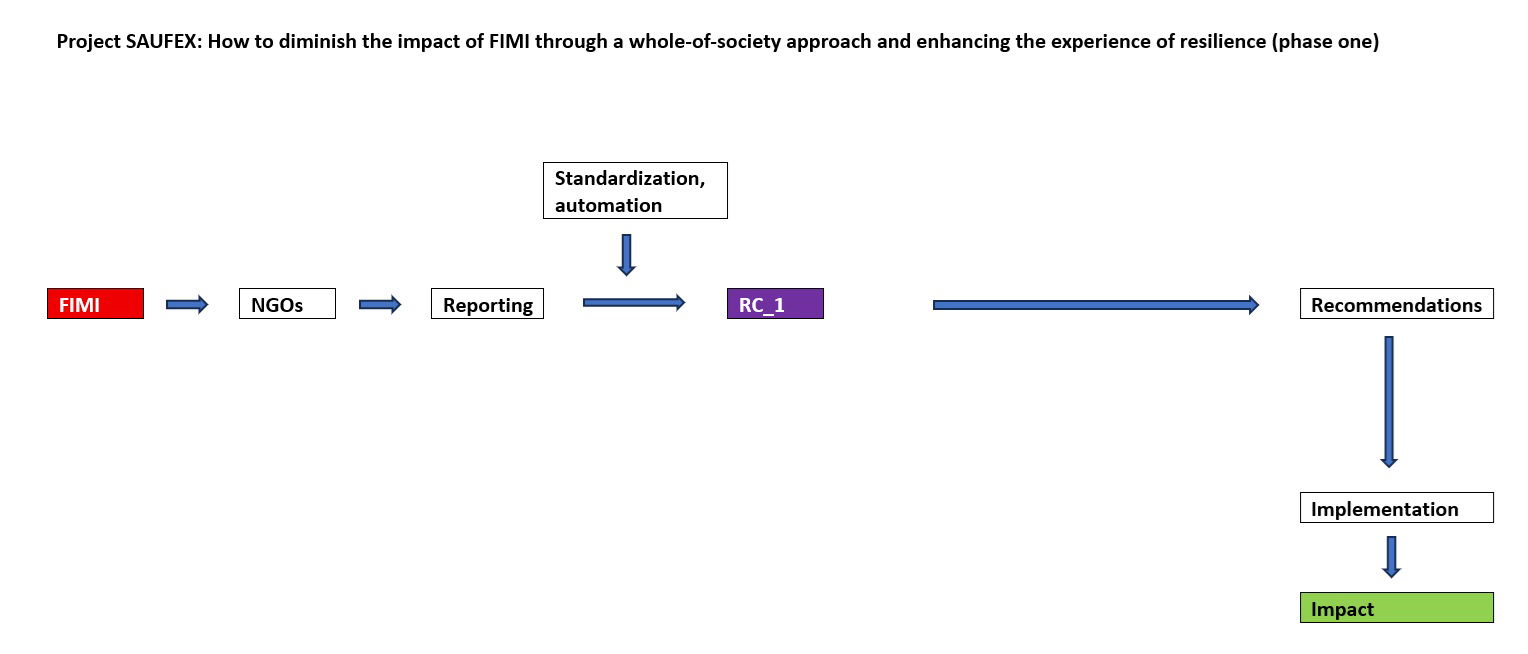
A SAUFEX project’s primary objective is to decentralize and democratize FIMI analysis and response capabilities. This begins with engaging NGOs and academic institutions in identifying, classifying, grading, and reporting FIMI incidents and campaigns, as well as in developing subsequent responses.

To advance this goal, the Polish Ministry of Foreign Affairs has established a new institution: the Resilience Council. A second Resilience Council specializing in DSA-related matters will be established by the Polish Ministry of Digital Affairs once the necessary parliamentary legislation is adopted.
Concretely, this means that FIMI incidents are reported by NGOs, in time using SAUFEX-based stardardization and automation protocols. Based on the reporting Resilience Councils draft recommendations that are then, ideally, implemented and lead to less impact of the FIMI incidents.
SAUFEX phase two
While Resilience Councils represent meaningful progress toward a whole-of-society approach, they constitute only the foundation of a much broader approach. Resilience Councils for NGOs and academia lack two essential whole-of-society elements. First, though these councils engage important societal stakeholders, they exclude a crucial actor: the general public. Second, they focus on evidence gathering, interpretation, and response formulation, but neglect what Stephan Lewandowsky identifies as intuition-based conceptions of truth: “belief-speaking”.
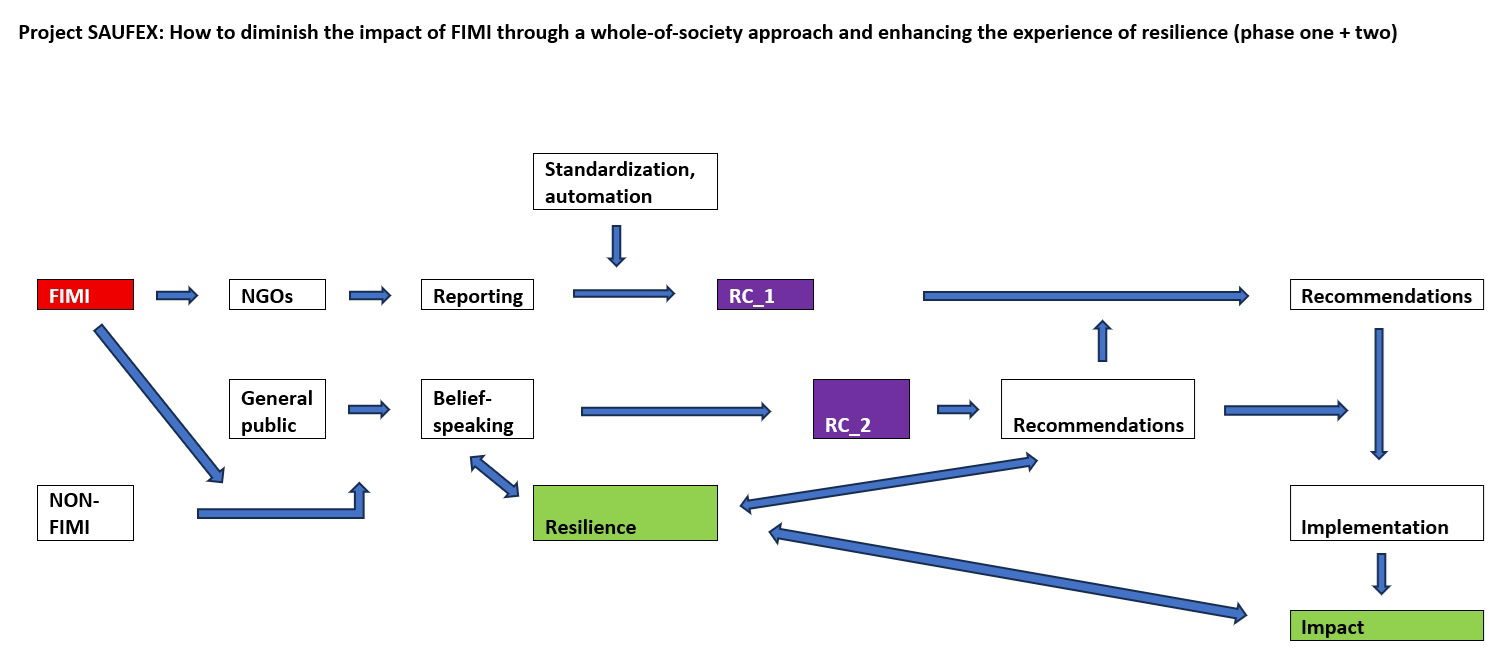
That is why, in phase two, SAUFEX is piloting a second type of Resilience Councils based on engaging the general public and focusing on “belief-speaking”.
The assumption is that this “belief-speak” is influenced by FIMI incidents (as well as by non-FIMI information). By gathering “belief-speak” the assumption becomes testable on the level of whether FIMI content is reflected in the gathered “belief-speak”.
Opinions by the general public are gathered by the second type of Resilience Councils and translated into recommendations (that are verified by the general public). The recommendations are to have an impact on the recommendations by the first type of Resilience Councils and on the implementation of these recommendations.
By providing the option to the general public to provide their opinions and having a mechanism in place to influence policy-making, the level of societal resilience is expected to rise. This enhanced societal resilience, in turn, is expected to lead to less impact of the FIMI incidents.
Subscribe now &
Get the latest updates
Subscribe